Exploring local towns in East Algarve
The eastern Algarve is dotted with charming towns, each with its own character and history. From Phoenician-era Tavira to the geometric streets of Vila Real de Santo António, here's what makes each place worth exploring.
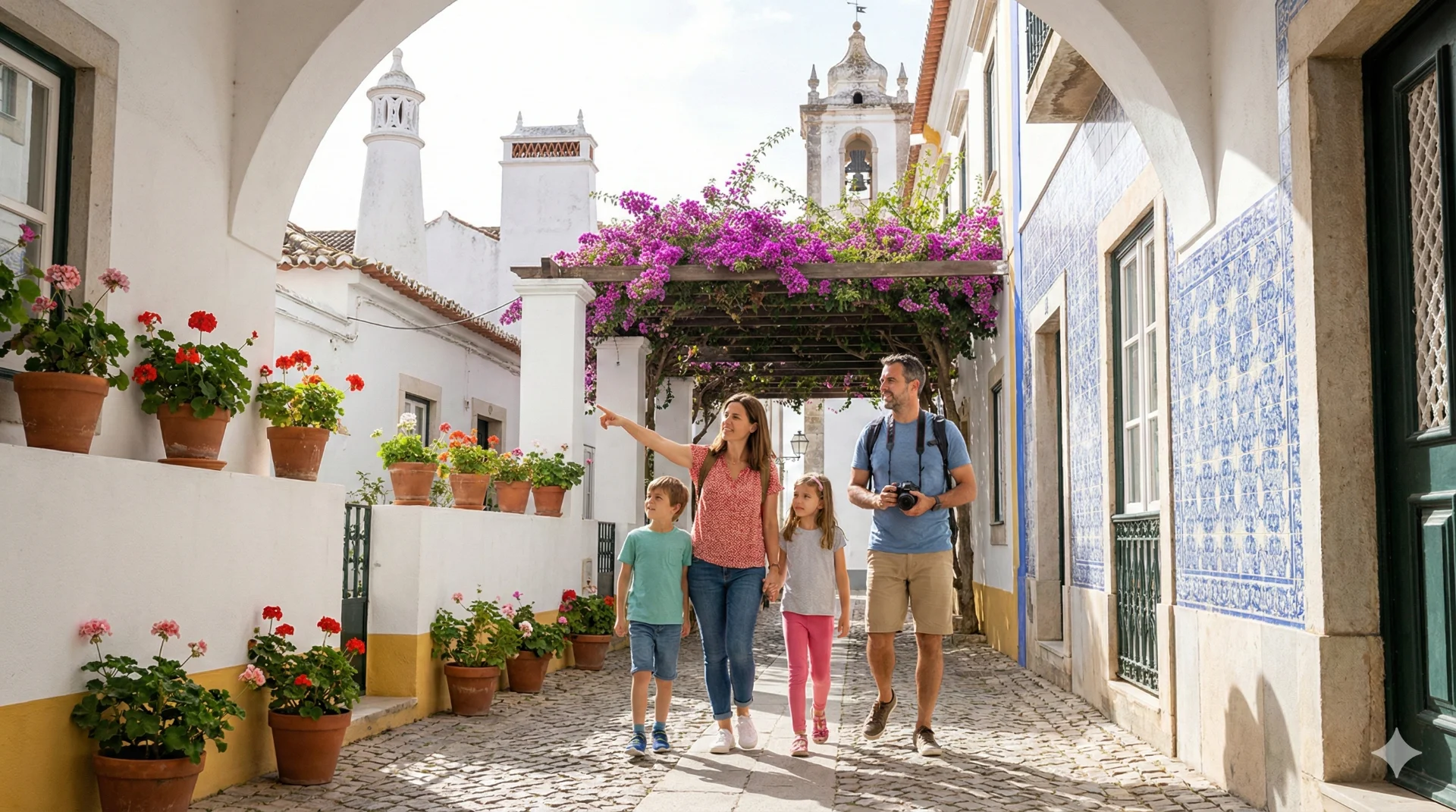
Exploring the Region — Towns to Visit
The eastern Algarve is dotted with charming towns, each with its own character and history. From Phoenician-era Tavira to the geometric streets of Vila Real de Santo António, here's what makes each place worth exploring.
Tavira
The "Venice of the Algarve"
Exploring Tavira is an irresistible invitation to charm. The journey takes you from the banks of the River Gilão up to the majestic castle walls, where breathtaking views await — traditional houses, the winding river, glistening salt pans, and the sea on the horizon.
Tavira is divided by the Séqua River (known as Gilão downstream), which flows gently into the Ria Formosa. The bridges — especially the Old Bridge — give the town a distinctive character that's earned it the nickname "Venice of the Algarve."
History in every corner
Few towns in Portugal have such a rich historical layering. Evidence suggests occupation since Phoenician times, followed by Roman settlement, prosperous trade under Moorish rule, and reconquest by the Knights Templar in the 13th century.
What to do
The best approach is to wander without a fixed destination. Explore the narrow alleys, climb and descend staircases, cross charming passages, and rest in the squares and gardens. A day spent getting lost in Tavira is a day you'll remember.
Vila Real de Santo António
Geometric beauty on the Spanish border
This picturesque town sits right on the border with Spain, facing Ayamonte across the Guadiana River. What immediately strikes visitors is the remarkably planned geometry — almost every street and building follows a precise 90-degree grid.
Why so symmetrical?
This wasn't by chance. Vila Real shares its origin story with central Lisbon — both were designed by the same mind under similar circumstances. After the devastating 1755 earthquake and tsunami, the Marquis of Pombal (then Prime Minister) seized the opportunity to rebuild Vila Real with a symmetrical urban structure: wide streets and standardised blocks, designed to impress visitors arriving from Spain.
The heart of town
The centrepiece is the Praça Marquês de Pombal, a beautiful square surrounded by traditional whitewashed houses with terracotta roofs, bordered by orange trees. Every detail was planned — the central obelisk and radial pavement pattern were designed to harmonise with the surrounding buildings and church.
Today, the square remains a centre of beauty and life, filled with bars, restaurants, and events. A unique place reflecting the Marquis of Pombal's legacy and Portugal's rich history.
Cacela Velha
Clifftop gem overlooking the Ria Formosa
Tucked within the Ria Formosa Natural Park between Tavira and Vila Real de Santo António, Cacela Velha is a small village with extraordinary beauty and historical depth. It offers some of the most spectacular views over the lagoon.
What you'll find
The excellently preserved historic centre looks out over the calm waters where boats rest in the peaceful ria. During low tide, locals collect shellfish and clams — traditions that have continued for generations.
The beach nearby (also called Fábrica) is considered one of Europe's most beautiful — testament to this area's natural wealth.
Islamic roots
Cacela Velha's history stretches back to the 10th century, when it was known as Medina de Qast'alla Daraj — a key centre of Gharb al-Andalus. Archaeological excavations in 2007 uncovered important traces of this past.
Today
The village enchants with cosy cafés, characterful restaurants, a beautiful church, and the remains of an ancient fortress. Surrounded by olive trees, the clifftop fort offers stunning views — perfect for contemplation and enjoying this unique place's serenity.
Olhão
Fishing port with Moorish soul
Olhão is a vibrant coastal city that grew from the fishing industry in the 17th century. Just ten kilometres east of Faro, it remains one of the region's most important ports.
Canning heritage
In 1882, Portugal's first canning factory opened here, launching a prosperous era. Tuna and sardine preserves quickly became an economic pillar, influencing the canning industry along the entire coast.
A heroic voyage
One remarkable chapter: in the early 19th century, seventeen brave locals sailed to Brazil aboard a 20-metre fishing boat called Bom Sucesso — without navigation charts — to inform exiled King João IV that the French had been defeated and the Portuguese throne awaited him. A testament to Olhão's courage and determination.
The fish market
Today, the waterfront fish market is a main attraction, drawing visitors with its lively, picturesque atmosphere. Beyond fresh fish, you'll find local produce like fruit, honey, and even live chickens.
Moorish architecture
Olhão's old quarter features distinctive Moorish-influenced buildings: whitewashed square houses with flat roofs and decorated chimneys. The 17th-century Church of Nossa Senhora do Rosário and the chapel of Nossa Senhora dos Aflitos — where fishermen's wives pray for their husbands' safety during storms — speak to the city's deep connection with the sea.
Faro
The Algarve's capital
Faro's beaches, bathed by the calm waters of the Ria Formosa where flamingos often take flight, mark the natural boundary with the sea. Beyond the coast, flat land stretches inland with Faro's buildings, lush orchards benefiting from fertile soil, and ancient water wheels — testaments to Moorish ingenuity. In the distance, an arc of hills adorned with groves frames the landscape.
Villages frozen in time
The villages in Faro's municipality seem untouched by the centuries. Imposing churches house precious sacred art treasures, while remnants of Roman grandeur dot the landscape, inviting exploration and wonder.
The old town
Faro's city centre, surrounded by walls from Moorish and medieval times, preserves rich heritage in its churches, museums, and green spaces — perfect for resting and contemplating near the lagoon and sea.
The stately architecture of some residences speaks to past splendour, while narrow streets lined with whitewashed houses reflect the Moorish heritage, giving the city singular charm.
Why visit
Exploring Faro means immersing yourself in a city full of stories to discover, enjoy, and remember. Between stunning natural landscapes, valuable historical and cultural heritage, and the tranquillity of its beaches and lagoon, Faro offers a diverse experience marked by the Algarve's beauty, history, and serenity.
Quick Reference
| Town | Character | Don't Miss | Time from Tavira |
|---|---|---|---|
| Tavira | Historic, romantic | Castle views, Old Bridge, wandering | — |
| Vila Real de S. António | Geometric, border town | Praça Marquês de Pombal | 25 min |
| Cacela Velha | Peaceful, scenic | Clifftop views, fortress | 15 min |
| Olhão | Authentic, fishing port | Fish market, Moorish quarter | 20 min |
| Faro | Historic capital | Old town, Ria Formosa, flamingos | 35 min |